Shoulder Pain & Frozen Shoulder Treatment in Mehsana, Expert Care by Dr. Sumit Prajapati, Axcura Ortho
Shoulder pain has a way of making itself felt in everything. Reaching for something on a shelf. Putting on a shirt. Turning over in bed at night. When the shoulder is not working as it should, the limitation is constant rather than occasional. Across Mehsana and North Gujarat, shoulder pain is one of the most common orthopaedic complaints seen at Axcura Ortho. The causes range from frozen shoulder and rotator cuff degeneration through to shoulder arthritis and post-injury stiffness. Each condition has a distinct pattern, a distinct cause and a distinct treatment pathway. At Axcura Ortho, shoulder pain is assessed by Dr. Sumit Prajapati, an Orthopaedic Surgeon with specialist expertise in shoulder conditions, joint replacement and non-surgical shoulder care. Every patient is assessed individually and treatment is tailored to the diagnosis, not a standard protocol.

Shoulder Pain at Axcura Ortho, Who Assesses and Treats It
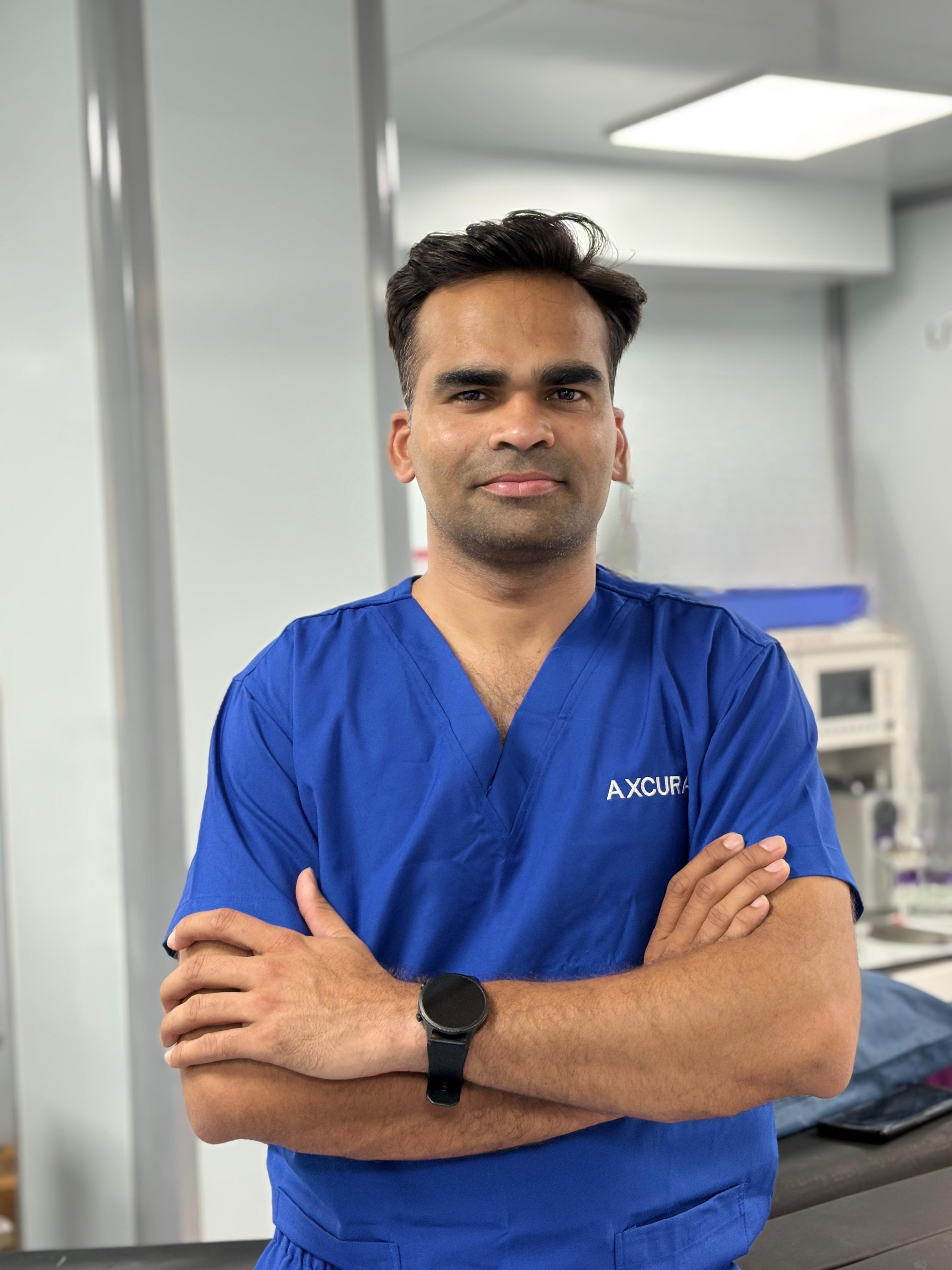
Shoulder pain and frozen shoulder at Axcura Ortho are assessed and managed by Dr. Sumit Prajapati, an Orthopaedic Surgeon whose clinical practice covers the full range of shoulder conditions from non-surgical management and injection therapies through to shoulder replacement surgery for advanced disease.
Dr. Sumit Prajapati, Orthopaedic Surgeon Specialising in Shoulder Pain & Frozen Shoulder Treatment, Mehsana
Dr. Sumit Prajapati assesses shoulder conditions with the same systematic approach applied to every joint at Axcura Ortho. An accurate diagnosis is established first, and treatment is recommended based on the specific condition, its severity and what the patient needs to be able to do. Conservative management is exhausted before surgical intervention is recommended. When shoulder replacement is the right answer for advanced shoulder arthritis, it is available at Axcura Ortho.
Patients from Mehsana, Visnagar, Unjha, Patan, Sidhpur and across North Gujarat are seen at Axcura Ortho for frozen shoulder, rotator cuff conditions, shoulder arthritis and shoulder replacement.
Why the Shoulder Is the Most Complex Joint to Diagnose Correctly
The shoulder is the most mobile joint in the body. It sacrifices stability for range of motion, and that trade-off makes it vulnerable to a wide range of conditions that can present with similar symptoms. Shoulder pain, stiffness and weakness can all arise from different structures within and around the joint, and each has a different cause and a different treatment.
This is why accurate diagnosis matters so much in shoulder care. Treating a rotator cuff condition as frozen shoulder, or managing shoulder arthritis as a soft tissue problem, leads to prolonged symptoms and delayed recovery. At Axcura Ortho, shoulder pain is assessed with clinical examination and appropriate imaging to establish the specific diagnosis before any treatment is recommended.
Shoulder Conditions Assessed and Treated at Axcura Ortho, Mehsana
These are the most common shoulder conditions seen at Axcura Ortho from patients across Mehsana and North Gujarat:
Frozen shoulder is one of the most common and frequently misunderstood shoulder conditions. It occurs when the capsule surrounding the shoulder joint becomes inflamed and progressively contracts, restricting movement in all directions. Frozen shoulder is not caused by inactivity alone. It has a strong association with diabetes, thyroid conditions and hormonal changes, and can develop after a period of immobilisation following injury or surgery. The condition passes through three stages: a painful freezing phase, a stiff frozen phase and a gradual thawing phase. Without appropriate management, the entire cycle can take two to four years. With the right treatment, recovery is significantly accelerated.
The rotator cuff is a group of four muscles and their tendons that stabilise the shoulder joint. Rotator cuff tendinopathy, also known as rotator cuff syndrome or shoulder impingement, occurs when the tendons become irritated and inflamed, typically from repetitive overhead activity or degenerative change with age. Subacromial bursitis, inflammation of the fluid-filled sac between the rotator cuff and the acromion, often coexists with tendinopathy and contributes to shoulder pain on lifting and overhead movement.
Degenerative rotator cuff tears develop gradually over years, in contrast to acute traumatic tears caused by a fall or injury. Partial thickness tears cause pain, weakness and a catching sensation with certain movements. Many degenerative partial tears are managed successfully without surgery through targeted physiotherapy and injection therapy.
Glenohumeral osteoarthritis is the progressive loss of articular cartilage from the ball and socket surfaces of the shoulder joint. It causes deep, aching shoulder pain, progressive stiffness and a grating sensation with movement. In its early stages it is managed conservatively. Advanced shoulder arthritis that no longer responds to non-surgical treatment is managed with shoulder replacement surgery at Axcura Ortho.
Calcium deposits within the rotator cuff tendons cause episodes of intense, acute shoulder pain that can be severely debilitating. The pain of calcific tendinitis is often described as the worst shoulder pain a patient has experienced and can come on suddenly, even at night. Most cases resolve with appropriate conservative management, including ultrasound-guided needling of the calcium deposit.
The acromioclavicular joint, where the collarbone meets the shoulder blade, is a common source of shoulder pain, particularly at the top of the shoulder and with cross-body movements. AC joint conditions include post-traumatic arthritis from previous separation injuries and degenerative arthritis from chronic loading.
Stiffness following a shoulder fracture, shoulder surgery or a period of immobilisation can develop into significant restriction of shoulder movement. Post-traumatic stiffness is assessed and managed at Axcura Ortho with a structured programme tailored to the stage of recovery and the underlying cause of the stiffness.
Diabetic patients have a significantly higher risk of developing frozen shoulder, rotator cuff tendinopathy and other shoulder conditions. Shoulder pain in a diabetic patient requires careful assessment to identify the specific diagnosis, as multiple conditions can coexist and blood glucose control affects both the development and recovery from shoulder conditions.
Frozen Shoulder in Detail, The Three Stages and Why Timing Matters
Frozen shoulder is among the most common shoulder conditions managed at Axcura Ortho and the one most frequently mismanaged elsewhere. Understanding the three stages of frozen shoulder is essential to selecting the right treatment at the right time.
Stage 1, The Freezing Phase
The shoulder becomes progressively more painful. Movement is still largely preserved but the pain is present at rest, at night and is particularly severe at the extremes of movement. This stage typically lasts two to nine months. Treatment in the freezing phase focuses on pain management and maintaining as much movement as possible.
Stage 2, The Frozen Phase
The pain begins to ease but the stiffness becomes the dominant problem. Movement in all planes is significantly restricted. Patients struggle with activities including overhead reach, dressing, reaching behind the back and sleeping on the affected side. This stage typically lasts four to twelve months. Treatment in the frozen phase focuses on controlled mobilisation and accelerating the recovery of range of motion.
Stage 3, The Thawing Phase
Movement gradually returns. The rate of recovery varies significantly between patients. Some recover fully within months, others over a period of years. Treatment in the thawing phase focuses on progressive strengthening as range of motion is restored.
Why Diabetes Makes Frozen Shoulder More Common and More Difficult to Treat
Diabetic patients are five times more likely to develop frozen shoulder than non-diabetic patients. In diabetic patients, frozen shoulder tends to be more severe, lasts longer and is more resistant to conventional treatment. Careful blood glucose management is an important part of the overall treatment approach, as poor glycaemic control is associated with a slower and more difficult recovery. This is discussed at every consultation for diabetic patients presenting with frozen shoulder at Axcura Ortho.
How Shoulder Pain Is Investigated, Getting to the Correct Diagnosis at Axcura Ortho
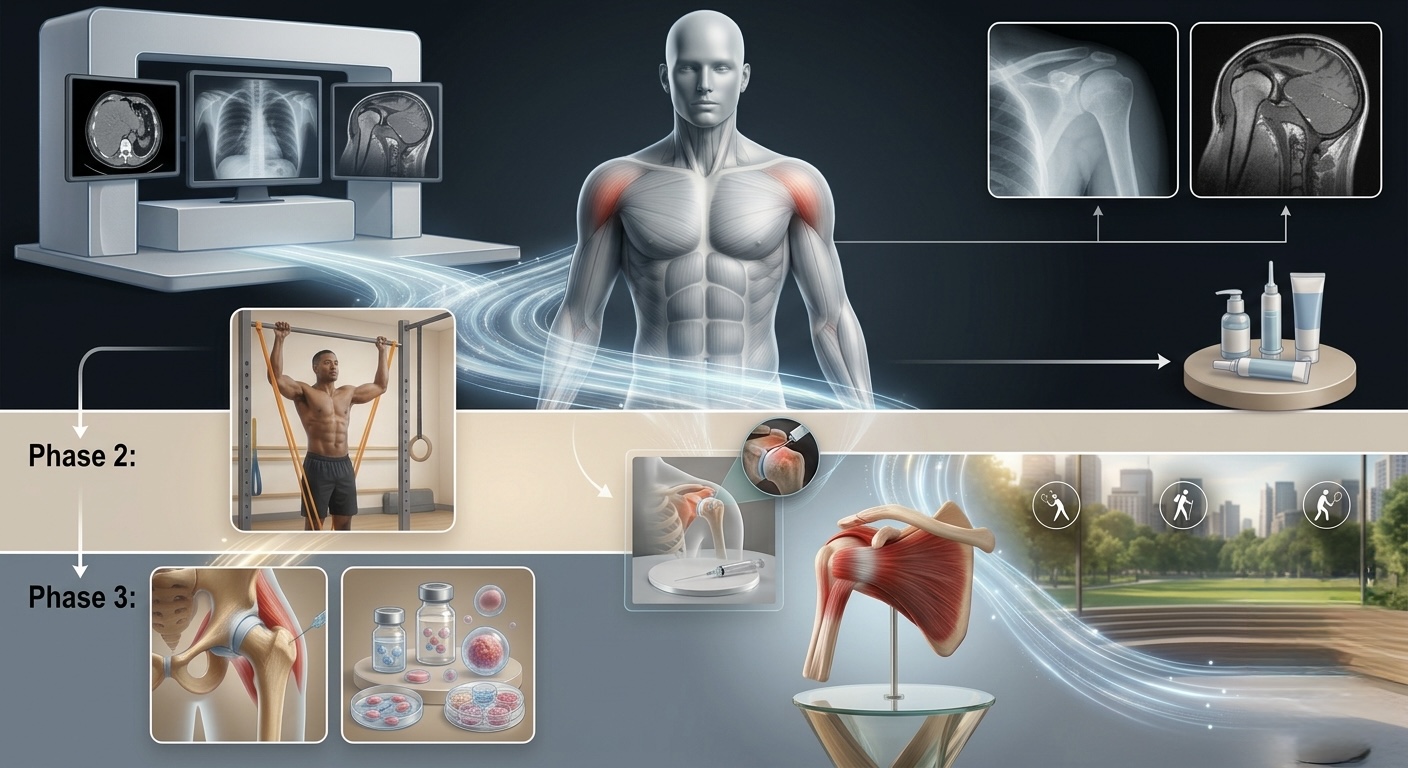
Shoulder pain is investigated systematically at Axcura Ortho. The combination of a thorough clinical examination and appropriate imaging provides an accurate diagnosis that determines the treatment pathway.
Diagnostic Methods
Clinical Examination
Clinical examination including assessment of active and passive range of motion, strength testing and specific provocative tests for each shoulder structure
X-Ray
X-ray to assess for arthritis, calcification, AC joint disease and bony abnormality
MRI Scan
MRI for detailed assessment of the rotator cuff, labrum, cartilage and capsule
Ultrasound
Ultrasound for dynamic assessment of the rotator cuff tendons and bursae, and for ultrasound-guided procedures
Blood Tests
Blood tests for inflammatory markers, blood glucose and thyroid function where clinically indicated
Diagnostic Injection
Diagnostic injection where the response to a targeted injection into a specific structure provides additional information about the source of the pain
Treatment Pathways for Shoulder Pain at Axcura Ortho, Starting With the Least Invasive
Treatment for shoulder pain at Axcura Ortho is staged, evidence-based and specific to the diagnosis. The approach begins with the most appropriate non-surgical option and progresses only when indicated.
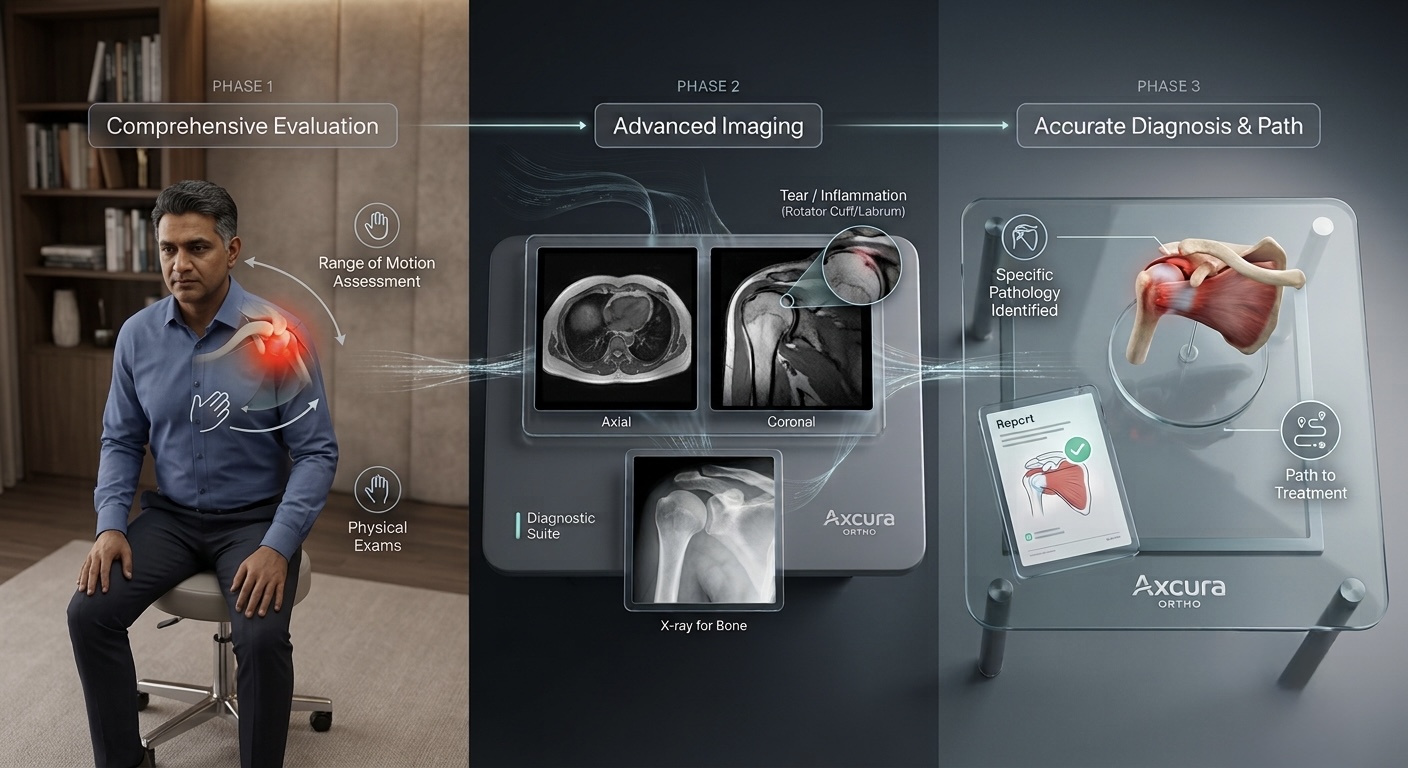
Non-Surgical Shoulder Pain Treatment in Mehsana
Surgical Treatment for Shoulder Conditions at Axcura Ortho, Mehsana
Surgery is recommended when conservative management has been appropriately applied and has not produced adequate improvement, or when the condition has progressed to the point where non-surgical treatment is unlikely to be effective. The following surgical options are available at Axcura Ortho:
When Shoulder Pain Should Not Be Left to Settle on Its Own
Most patients with shoulder pain wait significantly longer than is beneficial before seeking a specialist opinion. The following signs indicate that an assessment is needed rather than continued rest and self-management:
- Shoulder pain that has been present for more than four to six weeks without meaningful improvement
- Night pain that is regularly disrupting sleep
- Progressive loss of shoulder movement, particularly if movement is restricted in all directions
- Weakness in the shoulder or arm alongside the pain
- A history of diabetes, thyroid disease or recent immobilisation with new shoulder stiffness developing
- Shoulder pain following an injury, fall or period of immobilisation
- Shoulder that has dislocated or feels unstable
- Pain at the top of the shoulder with cross-body movements suggesting AC joint involvement
- A sudden, severe episode of shoulder pain that is unlike previous episodes, which may indicate calcific tendinitis
- Shoulder pain that has been present for more than four to six weeks without meaningful improvement
- Night pain that is regularly disrupting sleep
- Progressive loss of shoulder movement, particularly if movement is restricted in all directions
- Weakness in the shoulder or arm alongside the pain
- A history of diabetes, thyroid disease or recent immobilisation with new shoulder stiffness developing
- Shoulder pain following an injury, fall or period of immobilisation
- Shoulder that has dislocated or feels unstable
- Pain at the top of the shoulder with cross-body movements suggesting AC joint involvement
- A sudden, severe episode of shoulder pain that is unlike previous episodes, which may indicate calcific tendinitis
Why Patients Across North Gujarat Trust Axcura Ortho for Shoulder Care
Patients from Visnagar, Unjha, Patan, Sidhpur, Vadnagar and across North Gujarat are seen at Axcura Ortho in Mehsana for shoulder pain and frozen shoulder treatment. Specialist shoulder care that was previously only accessible in Ahmedabad is now available within North Gujarat.
- Dr. Sumit Prajapati brings over 10 years of specialist orthopaedic and shoulder care experience to every case
- Accurate diagnosis established before any treatment is recommended, not a standard protocol applied to all patients
- Full range of non-surgical shoulder treatments including steroid injection, hydrodilatation, ultrasound-guided needling and physiotherapy coordination
- Shoulder replacement and reverse shoulder replacement available for advanced disease
- Diabetic patients assessed and managed with an approach specific to their higher risk and more challenging recovery
- Calcific tendinitis managed with ultrasound-guided needling for rapid resolution of acute episodes
- 50 plus bedded hospital with dedicated ICU and full multi-disciplinary support
- Serving Mehsana, Visnagar, Unjha, Patan, Sidhpur, Vadnagar and all of North Gujarat
Questions Patients Ask About Shoulder Pain and Frozen Shoulder Treatment in Mehsana
How long does frozen shoulder last?
Without treatment, frozen shoulder typically runs a course of two to four years from onset to full recovery. With appropriate treatment at the right stage, this can be significantly shortened. Early accurate diagnosis is important because the treatment that is most effective changes depending on which phase of frozen shoulder the patient is in.
Is frozen shoulder the same as a rotator cuff problem?
No. Frozen shoulder and rotator cuff conditions are distinct diagnoses that can present with similar symptoms of shoulder pain and restricted movement. In frozen shoulder, movement is restricted in all directions equally. In rotator cuff conditions, specific movements are more affected than others. Accurate clinical assessment distinguishes between them and determines the correct treatment.
Does frozen shoulder always need surgery?
The majority of frozen shoulder cases are managed without surgery. Steroid injections, hydrodilatation and structured physiotherapy resolve most cases effectively. Surgery, either manipulation under anaesthesia or arthroscopic capsular release, is reserved for cases that have not responded adequately to non-surgical management.
What is hydrodilatation and how does it help frozen shoulder?
Hydrodilatation is a procedure in which fluid is injected under pressure into the contracted shoulder capsule, distending it and breaking up the adhesions that are restricting movement. It is one of the most effective treatments for frozen shoulder in the frozen and early thawing phases and provides rapid improvement in pain and movement for most patients.
Does diabetes cause frozen shoulder?
Diabetic patients are five times more likely to develop frozen shoulder than non-diabetic patients. The exact mechanism is related to the effects of chronically elevated blood glucose on connective tissue. In diabetic patients, frozen shoulder tends to be more severe and respond more slowly to treatment. Good blood glucose control supports recovery.
When does shoulder pain need surgery?
Surgery is considered when the specific condition has not responded to appropriately applied conservative management, or when the degree of structural damage makes non-surgical treatment unlikely to be effective. Shoulder replacement is considered for advanced glenohumeral arthritis. The threshold for surgery depends on the diagnosis, the patient's functional limitation and their goals for recovery.
Can shoulder pain be coming from the neck?
Yes. Pain from the cervical spine can be referred to the shoulder and upper arm, and can be confused with primary shoulder pathology. Part of the shoulder assessment at Axcura Ortho includes evaluation of the cervical spine to distinguish between referred pain from the neck and pain arising from the shoulder joint itself.
Does Axcura Ortho treat patients from outside Mehsana?
Yes. Patients from Visnagar, Unjha, Patan, Sidhpur, Vadnagar, Kheralu and across North Gujarat are regularly seen at Axcura Ortho for shoulder pain assessment, frozen shoulder treatment, shoulder injections and shoulder replacement surgery.
What Patients Have Experienced After Shoulder Treatment at Axcura Ortho, Mehsana
A successful shoulder treatment outcome is the patient who is sleeping through the night, reaching overhead without thinking about it and going about their daily life without the shoulder being the thing that limits them.
Frozen Shoulder Resolved in Four Months With Hydrodilatation and Physiotherapy, Mehsana
"I was suffering from severe frozen shoulder pain and could not lift my arm properly or perform daily activities comfortably. After consultation at Axcura Ortho, I underwent hydrodilatation treatment along with guided physiotherapy. Within four months, my shoulder movement improved significantly and I was able to return to my normal routine."
Calcific Tendinitis Pain Gone After a Single Procedure, North Gujarat
"I had sudden and intense shoulder pain due to calcific tendinitis, which made sleeping and moving my arm extremely difficult. After ultrasound-guided needling treatment at Axcura Ortho, my pain reduced quickly and shoulder movement improved. I was able to return to my regular activities with much better comfort."
Back to Full Activity After Shoulder Replacement, Mehsana
"Years of shoulder arthritis had made simple activities painful and difficult. After shoulder replacement surgery at Axcura Ortho, my pain reduced gradually and my shoulder strength improved with proper rehabilitation. I can now perform my daily activities confidently and enjoy a better quality of life."
Book Your Shoulder Assessment at Axcura Ortho, Mehsana
Whether shoulder pain has been present for weeks or months, an accurate diagnosis at Axcura Ortho is the starting point for effective treatment. Every patient is seen by a specialist, imaging is reviewed in context of the clinical examination and a treatment plan is recommended that is specific to the diagnosis, the stage of the condition and the patient's goals.
Serving Patients Across Mehsana, Visnagar, Unjha, Patan, Sidhpur, Vadnagar & North Gujarat
Axcura Ortho in Mehsana provides orthopaedic and shoulder care for patients across North Gujarat. From the first episode of shoulder pain through to frozen shoulder management, injection therapies and shoulder replacement surgery, every shoulder condition is assessed and treated with the precision and individual attention it requires.
How to Book Your Consultation at Axcura Ortho, Mehsana
View on Google Maps →
Full Range of Shoulder and Orthopaedic Services at Axcura Ortho, Mehsana
Dr. Sumit Prajapati, Shoulder Pain & Orthopaedic Surgery Services
- Frozen Shoulder (Adhesive Capsulitis) Treatment
- Hydrodilatation (Hydrodistension) for Frozen Shoulder
- Glenohumeral Steroid Injection
- Subacromial Steroid Injection
- Ultrasound-Guided Needling for Calcific Tendinitis
- AC Joint Injection
- Rotator Cuff Tendinopathy and Bursitis Management
- Shoulder Osteoarthritis Treatment
- Shoulder Replacement Surgery
- Reverse Shoulder Replacement
- Manipulation Under Anaesthesia for Frozen Shoulder
- Post-Traumatic Shoulder Stiffness Management
- AC Joint Arthritis Treatment
- Total Knee Replacement
- Total Hip Replacement
- DAA Hip Replacement (Direct Anterior Approach)
- Joint Replacement Surgery
- Fracture Management & Trauma Care
- Spine Surgery & Disc Conditions
- Slip Disc Treatment
- Paediatric Orthopaedics
