ACL Reconstruction Surgery in Mehsana, Expert Arthroscopic Knee Care by Dr. Hardik Nayak, Axcura Ortho
By Dr. Hardik Nayak | Axcura Ortho
An ACL tear changes things immediately. The moment it happens, most people know something is seriously wrong. A pop, a giving way, the knee swelling within hours. For athletes, it means time off the field. For working adults, it means months of uncertainty about whether the knee will ever feel stable again. At Axcura Ortho, Mehsana, Dr. Hardik Nayak is an Arthroscopic Surgeon specialising in ACL reconstruction and knee ligament surgery. He has helped patients across Mehsana and North Gujarat return to sport, work and daily life after ACL tears, with precise surgical technique, thorough pre-operative planning and a structured return-to-activity protocol. If your knee has given way and you want a clear answer on what has happened and what your options are, a consultation with Dr. Hardik is the right starting point.
Associations
Certified Care
Meet Dr. Hardik Nayak
Arthroscopic Surgeon & Sports Injury Specialist
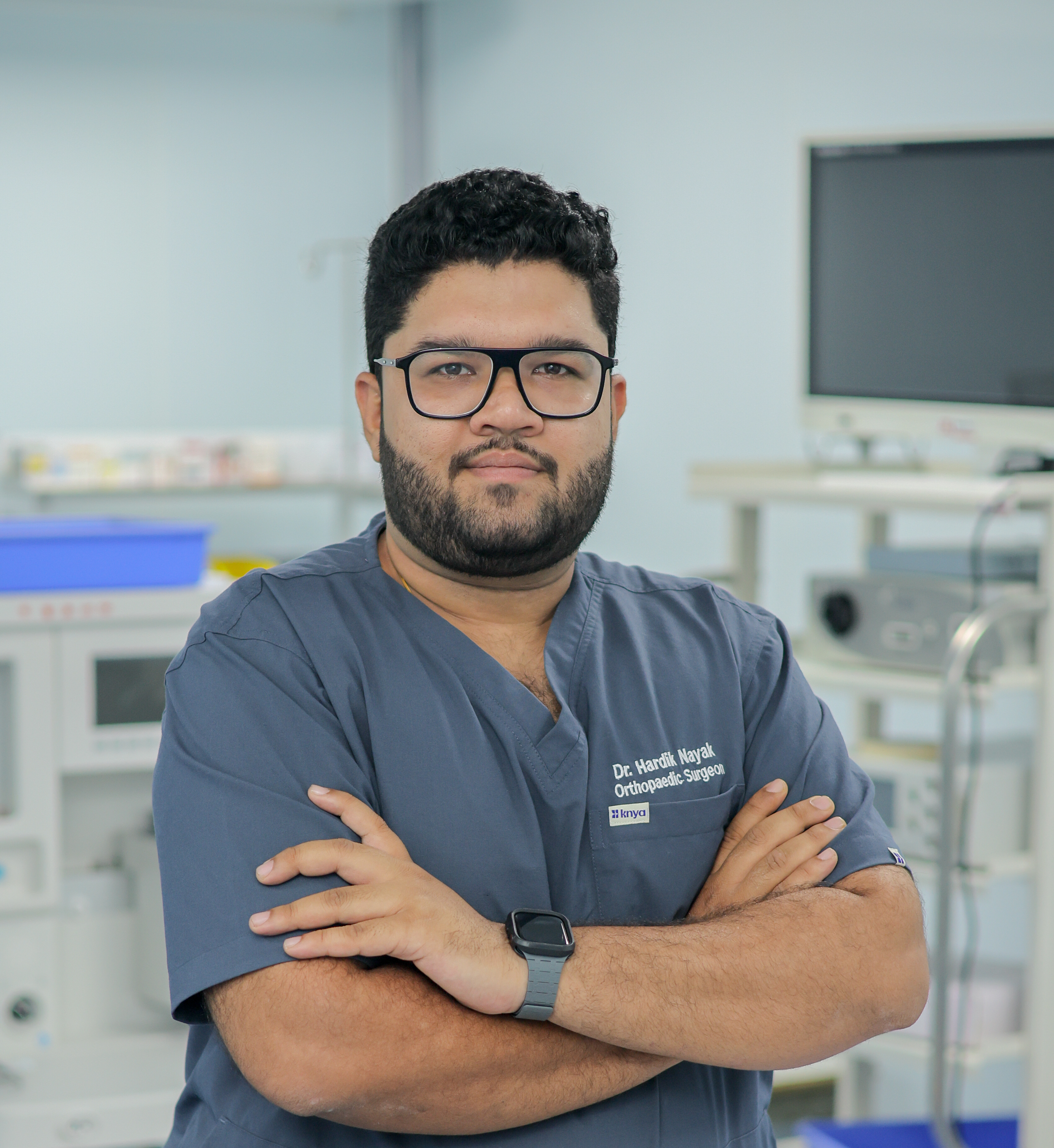
ACL reconstruction at Axcura Ortho is performed exclusively by Dr. Hardik Nayak, a specialist in arthroscopic surgery, knee ligament reconstruction and sports injury management. Every ACL case he manages, from the initial assessment and imaging review through to surgical planning, graft selection, the reconstruction itself and the post-operative rehabilitation protocol, is handled with the precision that this injury demands.
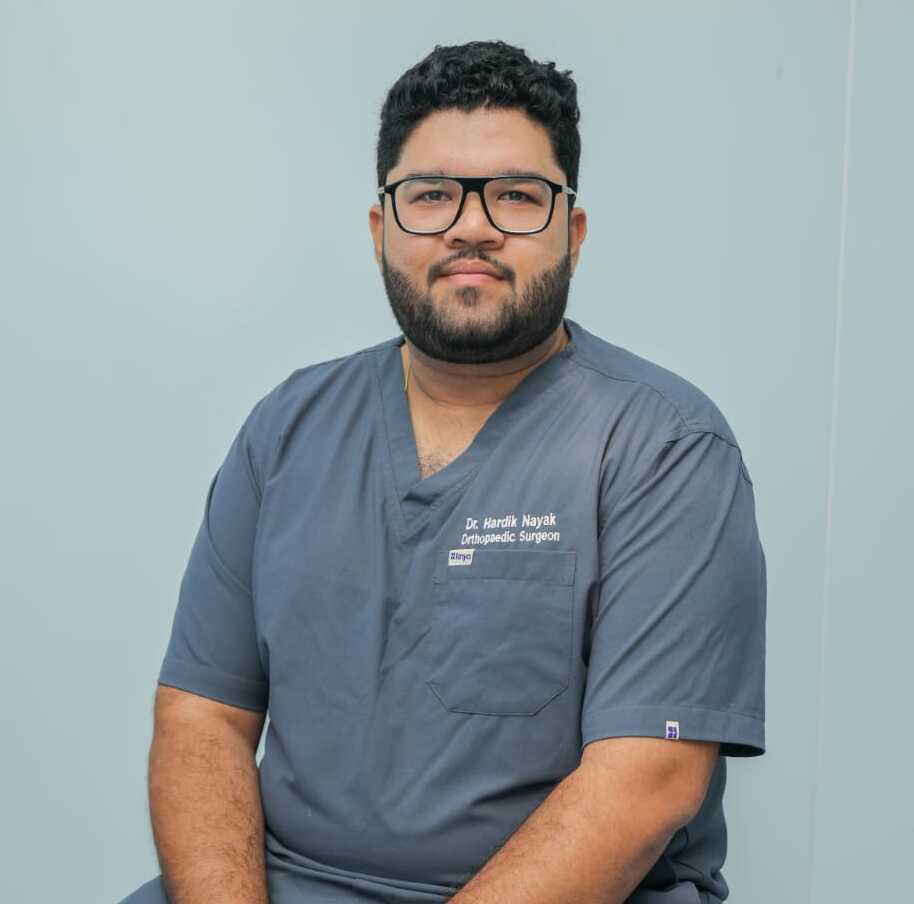
Dr. Hardik Nayak, Arthroscopic Surgeon Specialising in ACL Reconstruction, Knee Ligament Surgery & Sports Injury, Mehsana
Dr. Hardik Nayak performs all arthroscopic knee procedures at Axcura Ortho. ACL reconstruction is one of his core surgical areas, and he brings a rigorous approach to every aspect of the procedure, from graft selection and tunnel placement to fixation technique and the return-to-sport timeline. His goal in every ACL reconstruction is not just a knee that is stable on examination, but a knee the patient can trust completely in the activities that matter to them.
He manages both primary ACL reconstructions, where the ligament has torn for the first time, and revision ACL reconstructions, where a previous graft has failed and the knee requires more complex surgical planning. Patients come to Axcura Ortho from Mehsana, Visnagar, Unjha, Patan, Sidhpur, Vadnagar and across North Gujarat specifically for Dr. Hardik's expertise in knee arthroscopy and ligament surgery.
What is the ACL and Why Does a Tear Need Surgical Treatment?
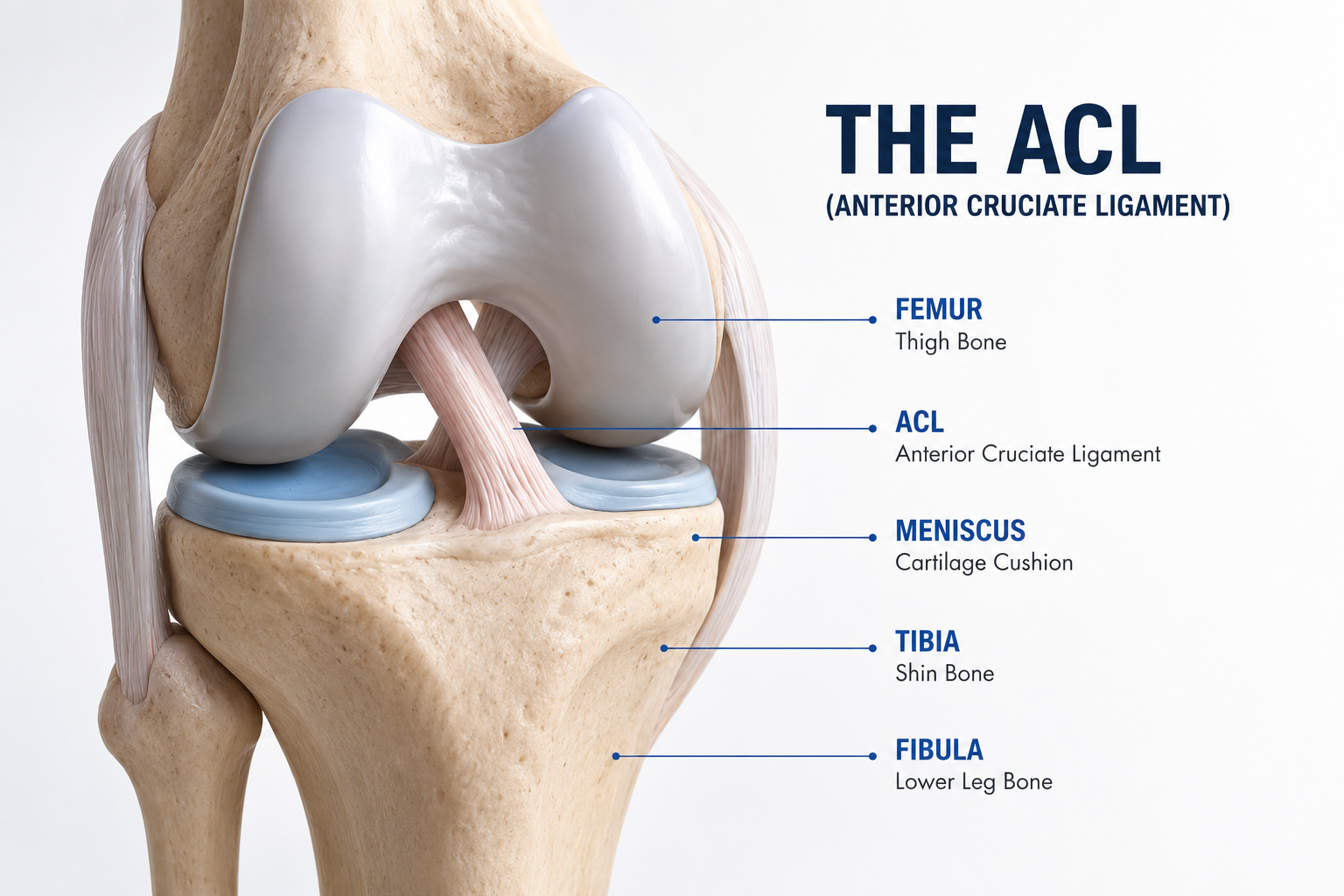
The anterior cruciate ligament (ACL) is one of the four major ligaments that stabilise the knee joint. It runs diagonally through the centre of the knee, connecting the femur (thigh bone) to the tibia (shin bone), and its primary function is to prevent the tibia from sliding forward under the femur and to control rotational stability of the knee. When the ACL tears, the knee loses this control. Pivoting, cutting, landing from a jump or even walking on uneven ground can cause the joint to give way unpredictably.
Unlike muscle or tendon, the ACL has very poor healing capacity. The blood supply to the ligament is limited, and a torn ACL does not knit back together on its own. This is why reconstruction, rather than simple repair, is the standard surgical treatment. A new ligament is created using a graft taken from elsewhere in the patient's own body, or in some cases from a donor source, and fixed into precisely positioned tunnels drilled through the femur and tibia to replicate the anatomy and function of the original ligament.
Who Needs ACL Reconstruction Surgery?
Not every ACL tear requires reconstruction surgery. Some patients, particularly those who are older, less active and have good muscle control around the knee, manage well with physiotherapy and activity modification without reconstruction. But for most patients who want to return to sport, physically demanding work or activities that involve pivoting and change of direction, a reconstructed ACL is necessary to restore the stability the knee needs. Without it, repeated episodes of giving way damage the menisci and cartilage progressively, accelerating the onset of knee arthritis.
Inside the Operating Theatre, How ACL Reconstruction is Performed at Axcura Ortho
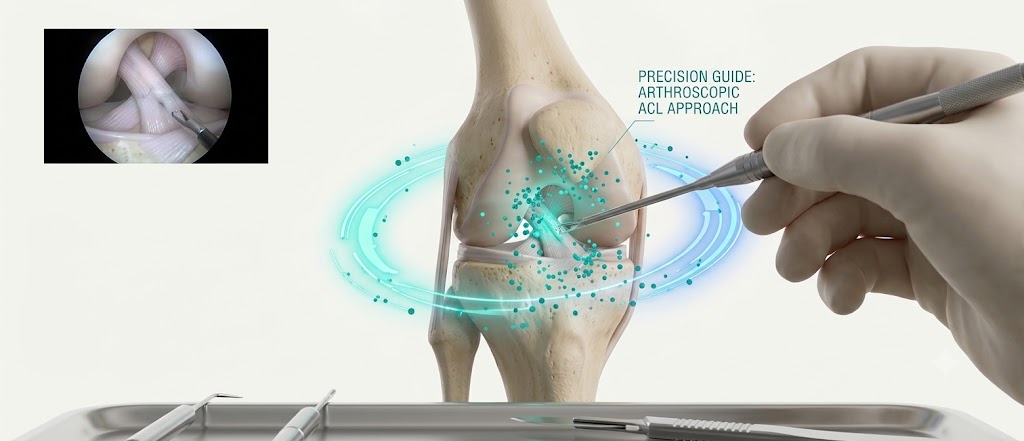
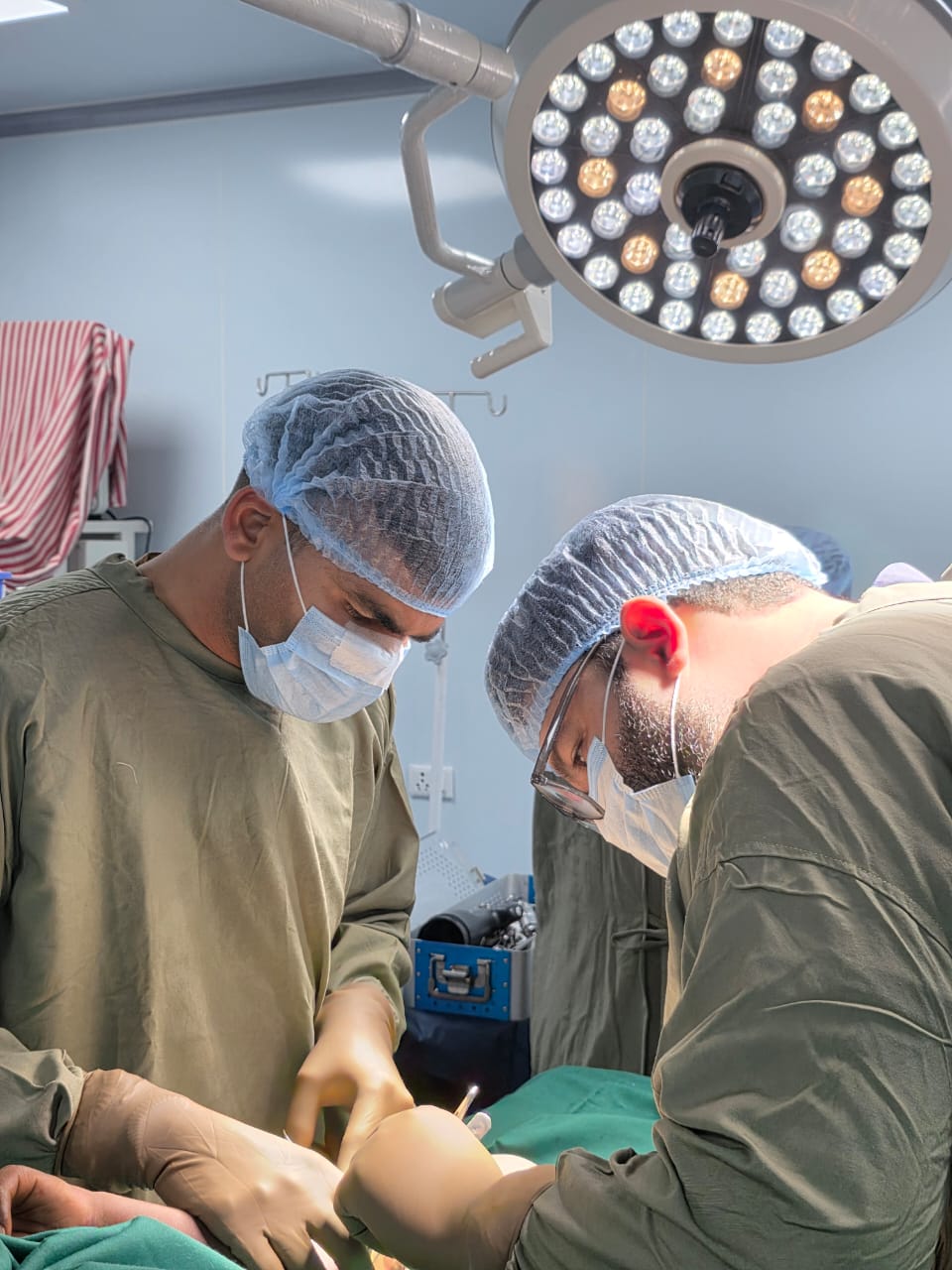
ACL reconstruction at Axcura Ortho is performed arthroscopically, meaning the entire procedure is carried out through small keyhole incisions using a camera and precision instruments. There is no large open incision, no cutting through the joint capsule and no need to disrupt the surrounding structures to access the ACL. This is one of the key reasons the recovery from modern arthroscopic ACL reconstruction is faster and less painful than many patients expect.
Graft Selection for ACL Reconstruction, What Dr. Hardik Uses and Why
The graft is the new ligament. It is not a synthetic implant. It is biological tissue that, over time, undergoes a process called ligamentisation, during which the graft is gradually remodelled by the body into functional ligament tissue. The choice of graft is one of the most important decisions in ACL reconstruction and Dr. Hardik discusses this with every patient individually based on their age, sport, activity demands and anatomy.
Hamstring Tendon Graft (Gracilis and Semitendinosus)
The most commonly used graft for ACL reconstruction in younger, active patients. Two tendons from the back of the thigh are harvested, folded to create a multi-strand graft and fixed into the femoral and tibial tunnels. Hamstring grafts have an excellent long-term track record, minimal donor site morbidity and reliable incorporation. The harvest site recovers well in the majority of patients.
Bone-Patellar Tendon-Bone (BPTB) Graft
The central third of the patellar tendon, with a block of bone at each end, is harvested and used as the graft. The bone-to-bone healing at each fixation point is faster than soft tissue fixation, which is an advantage in patients who want to return to high-demand pivoting sport as quickly as possible. BPTB grafts are often the preferred choice for elite athletes and those returning to contact sport.
Quadriceps Tendon Graft
An increasingly used option that combines a large cross-sectional area with relatively low donor site morbidity. Particularly useful in revision ACL surgery where the hamstring or patellar tendon has already been harvested, or in patients where anatomical considerations make the quadriceps tendon the most suitable choice.
Allograft (Donor Graft)
In selected patients, particularly those undergoing revision ACL surgery or multi-ligament reconstruction, donor tissue may be the most appropriate graft source. Dr. Hardik discusses the role of allograft, its biological considerations and its appropriate use on a case-by-case basis.
Jewel ACL (Artificial Synthetic Graft)
The Jewel ACL is a next-generation synthetic ligament graft used as an alternative to biological grafts in selected patients. It eliminates donor site morbidity entirely, as there is no tendon harvested from the patient's own body, and allows earlier functional rehabilitation due to its immediate mechanical strength. Dr. Hardik Nayak uses the Jewel ACL for appropriate candidates, including patients who want to avoid graft harvest, those with specific anatomical considerations, or those seeking a faster return to activity. Graft selection between biological and synthetic options is discussed in detail at the consultation.
Tunnel Placement, The Technical Detail That Determines Long-Term Outcomes
The position of the femoral and tibial tunnels determines whether the reconstructed ACL replicates the function of the original ligament. Tunnels that are placed even a few millimetres off the anatomical footprint of the original ACL result in a graft that does not control rotation correctly, even if it appears stable on a straight-line test. Dr. Hardik uses anatomical tunnel placement guided by arthroscopic visualisation and fluoroscopy, restoring the ACL to its native position rather than an approximation of it.
Managing Associated Injuries at the Time of ACL Reconstruction
ACL tears are frequently not isolated injuries. At the time of the ACL tear, the menisci, articular cartilage, posterolateral corner structures or other ligaments may also have been damaged. These associated injuries, if left untreated at the time of reconstruction, can significantly compromise the outcome of the ACL repair and increase the risk of graft failure. Dr. Hardik performs a thorough arthroscopic assessment of the entire joint at the time of ACL reconstruction and addresses any associated pathology simultaneously.
Meniscus Repair at the Time of ACL Reconstruction
A repairable meniscus tear found at the time of ACL reconstruction should be repaired rather than removed. The biological environment of an ACL reconstruction is particularly favourable for meniscal healing. Dr. Hardik performs simultaneous meniscal repair wherever the tear is repairable, preserving the shock-absorbing function of the meniscus and protecting the joint long-term.
Posterolateral Corner (PLC) Reconstruction
Posterolateral corner injuries occurring alongside an ACL tear are a common cause of ACL graft failure if not identified and addressed. Dr. Hardik assesses for PLC injury in every ACL patient and, where present, includes PLC reconstruction in the surgical plan.
Cartilage Lesion Management
Cartilage damage identified at the time of ACL reconstruction can be treated arthroscopically using microfracture, cartilage fixation or other techniques depending on the size and location of the lesion. Addressing cartilage damage at the time of ACL surgery avoids the need for a separate procedure later.
Not Every ACL Tear Needs an Operation, When Non-Surgical Management is the Right Path
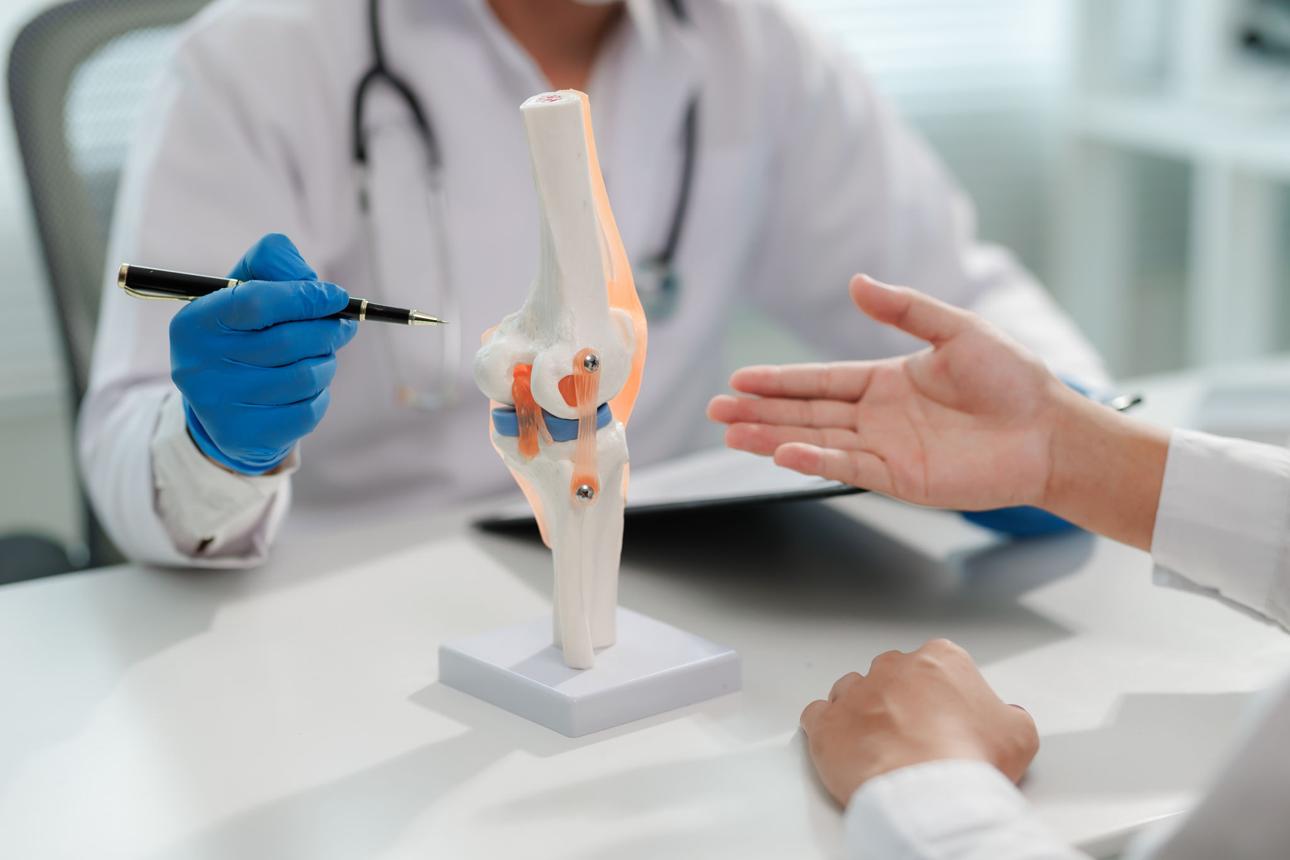
Dr. Hardik Nayak does not recommend ACL reconstruction as the default response to every ACL tear. For some patients, a well-structured physiotherapy and neuromuscular rehabilitation programme is the appropriate management, and surgery is not required. These are typically patients who are older, have lower activity demands, do not participate in pivoting sports and have good voluntary muscle control around the knee. The conversation about whether to reconstruct or rehabilitate is one Dr. Hardik has openly with every ACL patient, based on their specific goals, lifestyle and examination findings.
Dr. Hardik Nayak
Orthopaedic & Arthroscopic Surgeon